
Best Places to Retire in Arizona in 2026: A Financial Advisor's Comparison of Scottsdale, Gilbert, Sun City, and Prescott
A retirement-focused comparison of four popular Arizona destinations — cost of living, taxes, healthcare access, and the financial trade-offs that matter most after age 60.
Published by the Solutions First Financial Group planning team and reviewed for accuracy before publication.
Published
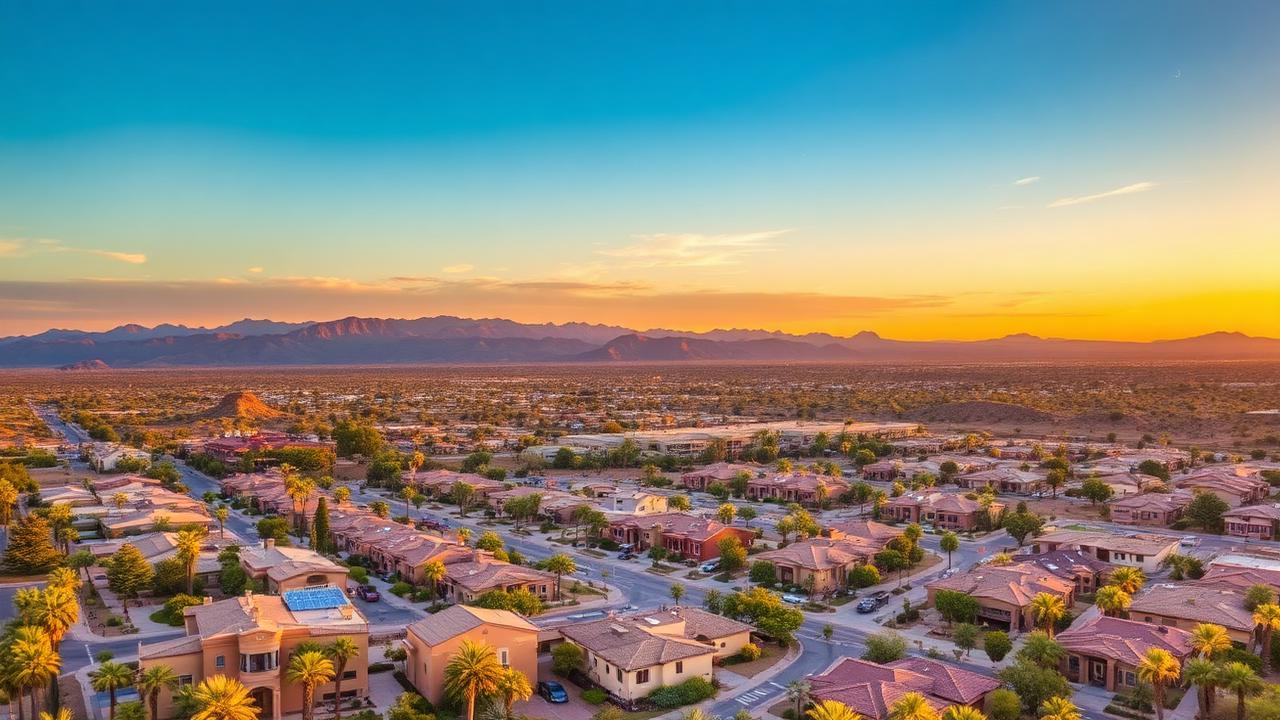
Arizona consistently ranks as one of the top three retirement destinations in the country, but 'Arizona' is not one place. A retiree in Sun City has a very different tax and healthcare picture than a retiree in Prescott. Below is a financial-advisor's-eye comparison of four popular options.
Scottsdale: high amenity, higher lifestyle spend
Cost of living runs roughly 15-20% above the national average, with housing and HOA/club dues doing most of the work. Property tax effective rates are low (about 0.45-0.65% in most of Maricopa County). Healthcare is excellent — HonorHealth and Mayo Clinic Arizona are both here. Any investable-asset range you see quoted for a comfortable lifestyle with travel is an illustration, not a target; your own number depends on your spending, healthcare costs, and existing income sources.*
Gilbert: family-adjacent, lower cost, growing fast
Gilbert appeals to retirees who want proximity to adult children and grandchildren in the East Valley without Scottsdale pricing. Cost of living is closer to the national average, property taxes remain low, and Banner Health has a strong presence. Traffic corridors (Loop 202, US-60) are the main quality-of-life variable to plan around.
Sun City / Sun City West: age-restricted, purpose-built
The original 55+ community model — lower home prices, low HOA-included amenities, and dedicated senior healthcare infrastructure. Cost of living is meaningfully below the state average. Trade-offs include older housing stock, no children in most subdivisions, and a longer drive to specialty medical care in central Phoenix.
Prescott: cooler climate, mountain-town pace
At roughly 5,400 feet of elevation, Prescott offers four mild seasons and summer highs 15-20 degrees cooler than Phoenix. Housing prices have risen significantly and inventory is tighter than the Valley. Healthcare is anchored by Yavapai Regional Medical Center; complex specialty care often still routes to Phoenix.
The tax picture is the same statewide — mostly
Arizona applies a flat 2.5% state income tax, does not tax Social Security, and has no estate or inheritance tax anywhere in the state. What varies locally is property tax millage, city sales tax, and HOA/community-district assessments — those can move your annual carrying cost by several thousand dollars between towns.
How we'd approach the decision
The 'best' Arizona town for retirement is the one that fits your monthly income need, healthcare requirements, and family geography — not the one with the highest ranking on a national list. A written retirement income plan makes the trade-offs concrete before you commit to a move.
*Hypothetical and illustrative ranges. Individual results and costs vary by neighborhood, HOA, and personal circumstances.
Frequently asked
Questions Scottsdale retirees ask us
- Which is the most tax-friendly city to retire in Arizona?
- Arizona's state-level tax treatment is the same statewide: a flat 2.5% income tax, no tax on Social Security, and no estate or inheritance tax. Local property tax rates and city sales taxes vary modestly, so the practical difference between cities is usually driven by housing costs and HOA fees rather than by taxes.
- Is Sun City still a good place to retire?
- For many retirees, yes. Sun City and Sun City West offer meaningfully lower housing costs, low HOA-included amenities, and 55+ community infrastructure. The trade-offs are older housing stock, longer drives to specialty medical care, and less flexibility if adult children may live with you.
- Is Prescott cheaper than Scottsdale?
- Housing is generally less expensive than north Scottsdale and Paradise Valley, but Prescott home prices have risen substantially over the past decade and inventory is tighter. Day-to-day cost of living can be comparable, though many retirees save on cooling and lifestyle spending.
Keep reading
- Retirement PlanningHow Much Do You Need to Retire in Scottsdale, Arizona?A practical look at retirement savings targets for Scottsdale and Phoenix, including cost of living, healthcar…Read article
- Retirement PlanningDownsizing vs. Staying Put in Scottsdale: The Real MathSelling the family home for something smaller is not always the financial win it looks like. Here is how we wa…Read article
- Retirement PlanningSECURE Act 2.0: Six Changes Retirees Should Actually Care AboutFrom the new RMD age to Roth catch-ups and 529-to-Roth rollovers — a plain-English summary of what matters for…Read article